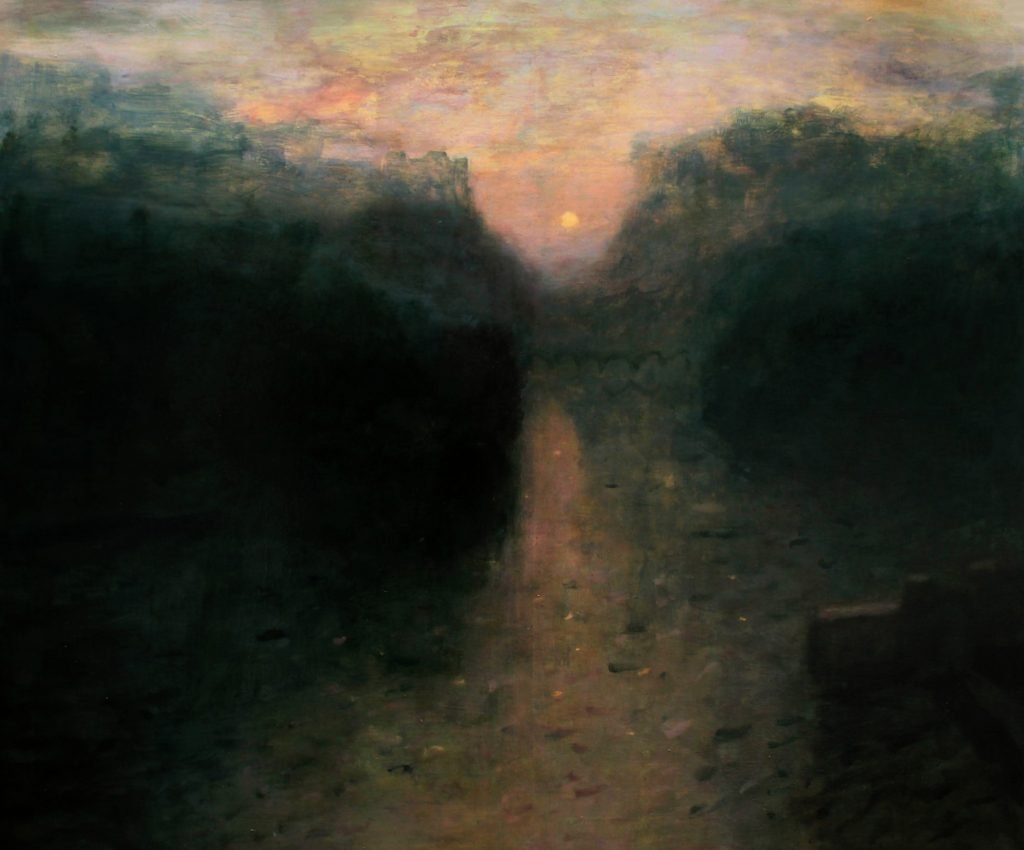
Most of my paintings start the same way: I go out with a sketchbook and a camera, find a spot, and draw. Mortimer Lake at Dusk began this way too, with a series of drawings of the old viaduct — standing there, working directly from what was in front of me.
Back in the studio, that on-site drawing gets scaled up. A small sketch becomes a large charcoal drawing, and the process of enlarging it changes things — marks get looser, details drop away, and the drawing starts to feel less like a record of a place and more like its own thing.
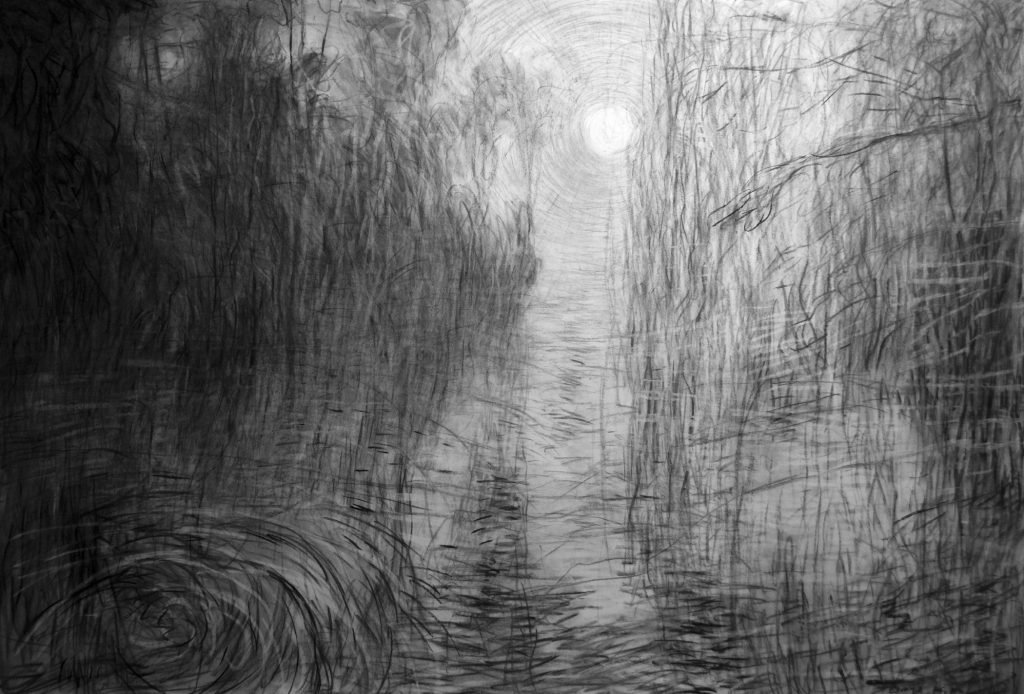
With this painting, something shifted further. Alongside the viaduct studies, I’d made a drawing called Sunset Estuary — and unlike the others, it wasn’t based on anywhere real. It was invented, made up entirely in the studio. That was the turning point. Once I had an imagined drawing sitting next to the observed ones, the question became: how do I paint something that never existed as a place to stand in front of?
There isn’t a neat answer. The painting went through a lot of changes before it settled — passages painted out, reworked, painted out again. Working from observation, you always have the option of going back to check something against what’s actually there. Working from imagination, the only check is whether the painting itself feels right, and that takes longer to find.
What I like about Mortimer Lake at Dusk now is that you can’t tell which parts came from the viaduct drawings and which came from Sunset Estuary. The real and the invented sit in the same space, and that’s really the aim of the whole practice — a landscape that’s rooted in a real place but no longer just describing it.